01
Pressure
Judge shin and knee support honestly.
Alternate seat field guide
Kneeling ergonomic chairs can help some desk setups, but only when pressure, height, and realistic session length are considered first.
Last updated 2026-05-22
Use these checks before comparing LeStallion's kneeling ergonomic office chair shortlist.
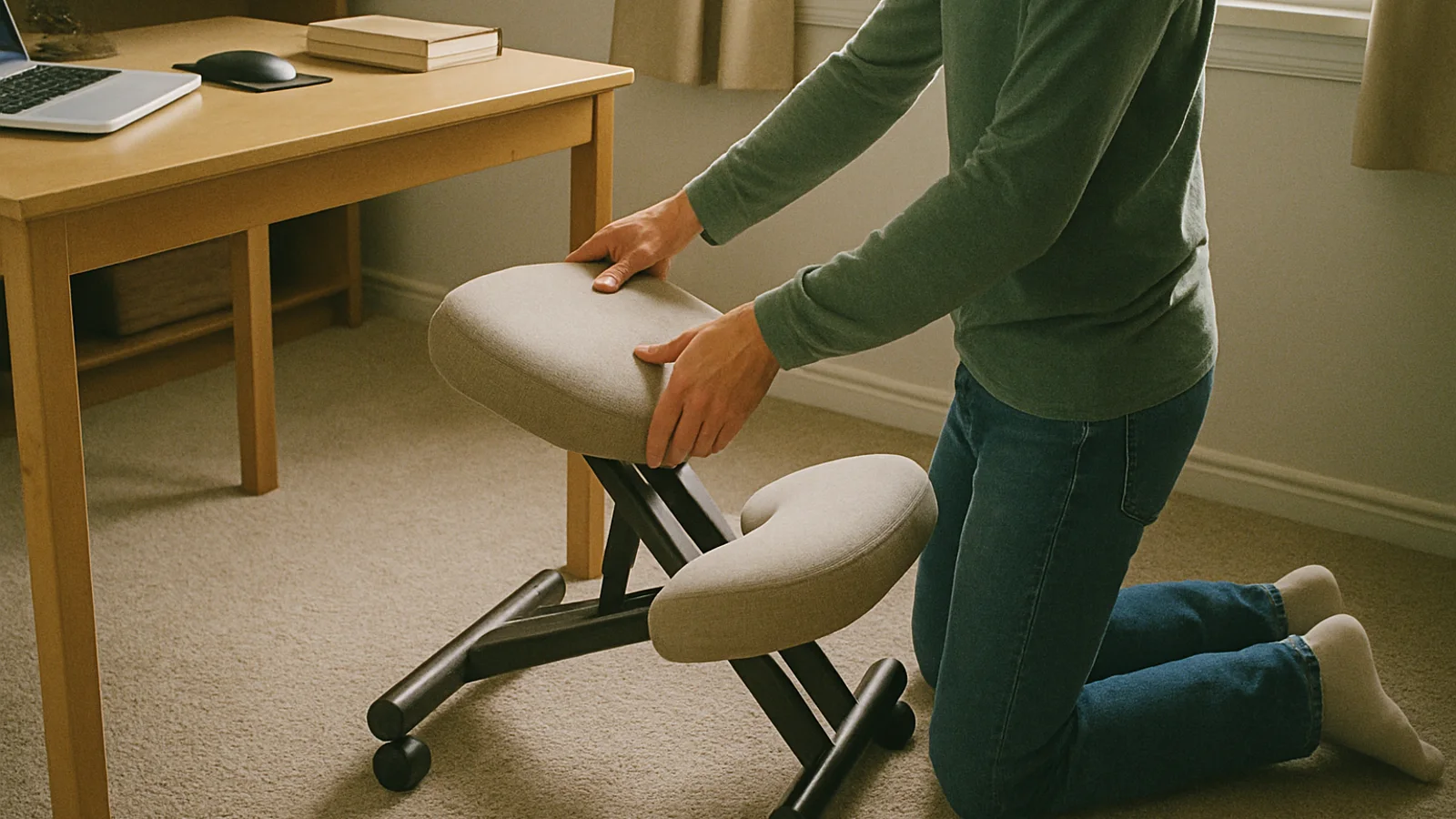
Judge shin and knee support honestly.
Match forward tilt to the desk.
Check storage, floor, and movement.
Use it as one posture option.
A kneeling ergonomic office chair is not a magic cure for desk discomfort. It is an alternate sitting tool that changes hip angle, shifts some pressure toward the shins, and encourages the sitter to notice posture instead of collapsing into the back of a chair. That can be useful, but only when the chair is matched to the desk, the user, and the length of the work session.
The first practical question is pressure. A kneeling chair that looks elegant in a photo can feel wrong quickly if the pads are narrow, the angle is too steep, or the sitter treats it like an all-day seat. I would compare pad shape, cushion density, seat height, and the ability to switch back to a normal chair before giving too much weight to the style.
The first practical question is pressure. A kneeling chair that looks elegant in a photo can feel wrong quickly if the pads are narrow, the angle is too steep, or the sitter treats it like an all-day seat. I would compare pad shape, cushion density, seat height, and the ability to switch back to a normal chair before giving too much weight to the style.
Desk height matters because the forward tilt changes reach. If the keyboard is too high, the shoulders rise. If the desk is too low, the sitter may fold forward. The right setup keeps elbows relaxed, feet and shins supported, and the screen at a comfortable height. The chair cannot fix a desk that fights the body.
Desk height matters because the forward tilt changes reach. If the keyboard is too high, the shoulders rise. If the desk is too low, the sitter may fold forward. The right setup keeps elbows relaxed, feet and shins supported, and the screen at a comfortable height. The chair cannot fix a desk that fights the body.
The room also matters. Kneeling chairs can be visually lighter than bulky task chairs, which helps in a compact office. They can also be awkward to tuck away if the frame, wheels, or rocker base is not matched to the floor plan. A good shortlist should include ordinary movement: sitting down, standing up, rolling aside, and storing the chair after work.
The room also matters. Kneeling chairs can be visually lighter than bulky task chairs, which helps in a compact office. They can also be awkward to tuck away if the frame, wheels, or rocker base is not matched to the floor plan. A good shortlist should include ordinary movement: sitting down, standing up, rolling aside, and storing the chair after work.
Use a rotation mindset. Many people enjoy a kneeling chair most as one option in the day rather than the only chair. If it helps for focused writing or short desk blocks, that is still valuable. The best choice is the chair that supports healthy variation without pretending one posture solves every problem.
Use a rotation mindset. Many people enjoy a kneeling chair most as one option in the day rather than the only chair. If it helps for focused writing or short desk blocks, that is still valuable. The best choice is the chair that supports healthy variation without pretending one posture solves every problem.
A kneeling ergonomic office chair is not a magic cure for desk discomfort. It is an alternate sitting tool that changes hip angle, shifts some pressure toward the shins, and encourages the sitter to notice posture instead of collapsing into the back of a chair. That can be useful, but only when the chair is matched to the desk, the user, and the length of the work session.
The first practical question is pressure. A kneeling chair that looks elegant in a photo can feel wrong quickly if the pads are narrow, the angle is too steep, or the sitter treats it like an all-day seat. I would compare pad shape, cushion density, seat height, and the ability to switch back to a normal chair before giving too much weight to the style.
The first practical question is pressure. A kneeling chair that looks elegant in a photo can feel wrong quickly if the pads are narrow, the angle is too steep, or the sitter treats it like an all-day seat. I would compare pad shape, cushion density, seat height, and the ability to switch back to a normal chair before giving too much weight to the style.
| Setup issue | Good signal | Watch carefully |
|---|---|---|
| Pad comfort | Wide, supportive shin pads | Sharp knee pressure |
| Desk match | Relaxed elbows and screen height | Raised shoulders |
| Daily use | Easy rotation with a task chair | Expecting all-day use immediately |
If two kneeling chairs look similar, choose the one with clearer dimensions, better pad descriptions, simpler height adjustment, and a return policy that lets you correct a poor fit. Then compare the kneeling ergonomic office chair shortlist with those questions in mind.
Many users do better rotating it with another chair rather than forcing all-day use.
Pad comfort, desk height, and whether the chair lets your shoulders stay relaxed.
It depends on the floor and room. Wheels help movement, while a rocker can feel more active but less stable for some desks.
It can encourage a different posture, but it does not replace desk setup, breaks, or professional guidance for pain.
Yes, if the frame stores easily and does not create awkward movement around the desk.
A kneeling ergonomic chair should be judged in the room where it will actually be used. I would place a tape outline on the floor, roll the chair toward the desk, and check whether standing up feels natural. Some frames need more clearance than expected because the shin pads extend forward. Others look compact but become annoying when the user has to slide around a rug, bin, or desk leg.
Session length is another practical filter. A kneeling chair may feel refreshing for focused writing, budgeting, reading, or short planning blocks, then feel too intense if the user tries to stay in it all afternoon. That does not make the chair a failure. It means the chair is working as a posture variation tool. The safest buying decision is the one that leaves room for movement, breaks, and a normal task chair nearby.
Finally, check how clear the product information is. Good pages show dimensions, adjustment range, frame type, pad material, wheel or rocker details, and return terms. If those details are hard to find, the chair may still be good, but the comparison becomes riskier. Plain information is a strong signal for this category because the fit is so personal.
The last pass is deliberately ordinary: sit down, reach for the keyboard, look at the screen, stand up, and return to the chair. If those actions feel awkward in the imagined setup, the problem will probably be larger in daily use. A kneeling chair can be helpful, but it should not require a perfect ritual every time the user wants to answer a message or write a paragraph.
For many workrooms, the best result is not replacing every chair. It is creating a small menu of postures: task chair for long calls, kneeling chair for short focused sessions, standing break for reset, and walking break when concentration fades. A product that fits that menu honestly is more useful than one sold as a total posture solution.
One more useful habit is to compare the chair after the first excitement has passed. Ask whether the frame will still be easy to move, whether the pads will be tolerable during an ordinary afternoon, and whether the chair encourages breaks instead of becoming another rigid rule. Those questions keep the decision practical and human.
For a more traditional seat comparison, see the previous chair note: brown leather ergonomic office chair guide.